











Why Stretching Is Essential for Desk Workers
Modern office jobs often require sitting for long hours, which can lead to neck pain, shoulder stiffness, back discomfort, tight hips, and poor posture. Over time, prolonged sitting reduces muscle flexibility, limits blood circulation, and increases the risk of musculoskeletal problems. The good news is that incorporating simple stretching exercises into your daily routine can help relieve tension, improve mobility, and keep your body active throughout the workday. You don’t need a gym or special equipment—just a few minutes every hour can make a significant difference to your physical health, comfort, and productivity.
Common Health Problems Caused by Sitting All Day
Before exploring the best stretching exercises, it’s important to understand how prolonged sitting affects your body. Spending hours at a desk without movement may contribute to:
- Neck stiffness and pain
- Shoulder tension
- Upper and lower back pain
- Tight hips and hamstrings
- Wrist and forearm discomfort
- Poor posture
- Reduced blood circulation
- Muscle fatigue
- Decreased flexibility
- Lower energy levels
Regular stretching helps minimize these issues and supports better workplace wellness.
1. Neck Tilt Stretch

The Neck Tilt Stretch is one of the simplest exercises for desk workers who experience neck stiffness after sitting for long hours. Looking at a computer screen for extended periods can strain the neck muscles and lead to discomfort or tension headaches. Performing this stretch several times a day helps improve flexibility, reduce muscle tightness, and promote better posture.
Targets:
- Neck muscles
- Upper shoulders
How to do it:
- Sit or stand with your back straight.
- Slowly tilt your head toward one shoulder.
- Keep the opposite shoulder relaxed.
- Hold for 15–20 seconds.
- Repeat on the other side.
Benefits:
- Reduces neck stiffness
- Relieves muscle tension
- Improves flexibility
- Helps prevent tension headaches
- Supports better posture
2. Shoulder Rolls
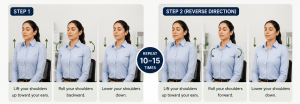
Shoulder Rolls are an effective way to release tension caused by typing, using a mouse, or sitting in the same position throughout the day. This simple movement increases blood circulation around the shoulders, loosens tight muscles, and improves mobility. It’s an excellent stretch to perform during short breaks between work sessions.
Targets:
- Shoulders
- Upper back
- Neck
How to do it:
- Sit or stand comfortably.
- Lift your shoulders upward.
- Roll them backward.
- Lower them slowly.
- Repeat 10–15 times, then reverse direction.
Benefits:
- Relieves shoulder tension
- Improves circulation
- Increases shoulder mobility
- Reduces stiffness
- Encourages better posture
3. Chest Opener Stretch
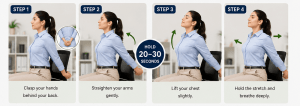
Long hours at a desk often cause rounded shoulders and tight chest muscles. The Chest Opener Stretch helps reverse poor posture by opening the chest and stretching the front of the shoulders. Practicing this exercise regularly makes breathing easier and reduces upper-body discomfort.
Targets:
- Chest muscles
- Shoulders
- Upper back
How to do it:
- Stand or sit upright.
- Clasp your hands behind your back.
- Straighten your arms gently.
- Lift your chest slightly.
- Hold for 20–30 seconds.
Benefits:
- Opens the chest
- Improves posture
- Reduces shoulder tightness
- Enhances flexibility
- Supports healthy breathing
4. Upper Back Stretch
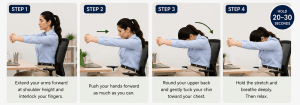
The Upper Back Stretch is ideal for relieving stiffness between the shoulder blades after prolonged computer use. It gently stretches the muscles of the upper spine and helps reduce tension built up during long periods of sitting. This stretch also improves posture and overall spinal mobility.
Targets:
- Upper back
- Shoulder blades
- Spine
How to do it:
- Extend your arms forward.
- Interlock your fingers.
- Push your hands away.
- Round your upper back gently.
- Hold for 20–30 seconds.
Benefits:
- Relieves upper back pain
- Improves spinal mobility
- Reduces muscle tightness
- Enhances flexibility
- Promotes better posture
5. Seated Side Stretch
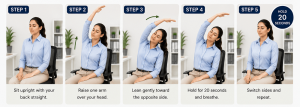
The Seated Side Stretch helps lengthen the muscles along your sides while improving flexibility in your shoulders and lower back. It’s an excellent exercise for reducing stiffness caused by sitting continuously and helps restore natural movement throughout your body.
Targets:
- Side body
- Lower back
- Shoulders
How to do it:
- Sit upright.
- Raise one arm overhead.
- Lean gently toward the opposite side.
- Hold for 20 seconds.
- Repeat on the other side.
Benefits:
- Improves flexibility
- Reduces side-body tension
- Supports spinal mobility
- Relieves stiffness
- Increases comfort while sitting
6. Wrist Stretch
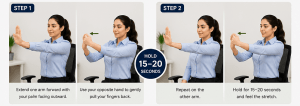
Frequent typing and mouse use place continuous stress on the wrists and forearms. The Wrist Stretch helps improve flexibility, reduce muscle tightness, and support healthy joint movement. Performing this stretch throughout the workday may help reduce discomfort associated with repetitive office tasks.
Targets:
- Wrists
- Forearms
- Hands
How to do it:
- Extend one arm forward.
- Keep your palm facing outward.
- Gently pull back your fingers.
- Hold for 15–20 seconds.
- Repeat on the opposite hand.
Benefits:
- Relieves wrist tension
- Improves flexibility
- Supports hand mobility
- Helps prevent repetitive strain
- Reduces discomfort from typing
7. Seated Spinal Twist
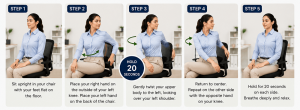
The Seated Spinal Twist is a gentle movement that improves spinal flexibility while relieving stiffness in the lower and middle back. It’s particularly beneficial for office workers who remain seated for long periods and want to improve mobility without leaving their workstation.
Targets:
- Spine
- Lower back
- Core muscles
How to do it:
- Sit tall in your chair.
- Place one hand on the opposite knee.
- Rotate your upper body slowly.
- Hold for 20 seconds.
- Repeat on the opposite side.
Benefits:
- Improves spinal flexibility
- Relieves back stiffness
- Supports healthy posture
- Increases mobility
- Reduces muscle tension
Tips for Desk Workers
- Stand up every 45–60 minutes.
- Drink enough water.
- Adjust your chair and monitor height.
- Keep your feet flat on the floor.
- Walk for a few minutes during breaks.
- Practice deep breathing while stretching.
Frequently Asked Questions:
How often should desk workers stretch?
Stretch every 1–2 hours for 5–10 minutes to reduce stiffness and improve circulation.
Can stretching improve posture?
Yes. Regular stretching helps loosen tight muscles and supports better posture when combined with good workstation ergonomics.
What is the best stretch for neck pain?
The neck tilt stretch and gentle shoulder rolls are excellent for relieving everyday neck tension caused by prolonged sitting.
Why You Should Stretch Every 60 Minutes
Health experts recommend standing up and moving at least once every hour. Even a 5-minute stretching routine can improve circulation, reduce muscle tension, and refresh your mind. Taking short movement breaks also improves focus, boosts productivity, and helps prevent discomfort associated with prolonged sitting
Adding a few simple stretching exercises to your daily routine can significantly improve your comfort, posture, and productivity. Whether you work from home or in an office, these desk stretches help reduce stiffness, improve flexibility, and keep your body moving throughout the day. Small movement breaks can make a big difference to your long-term health.
